
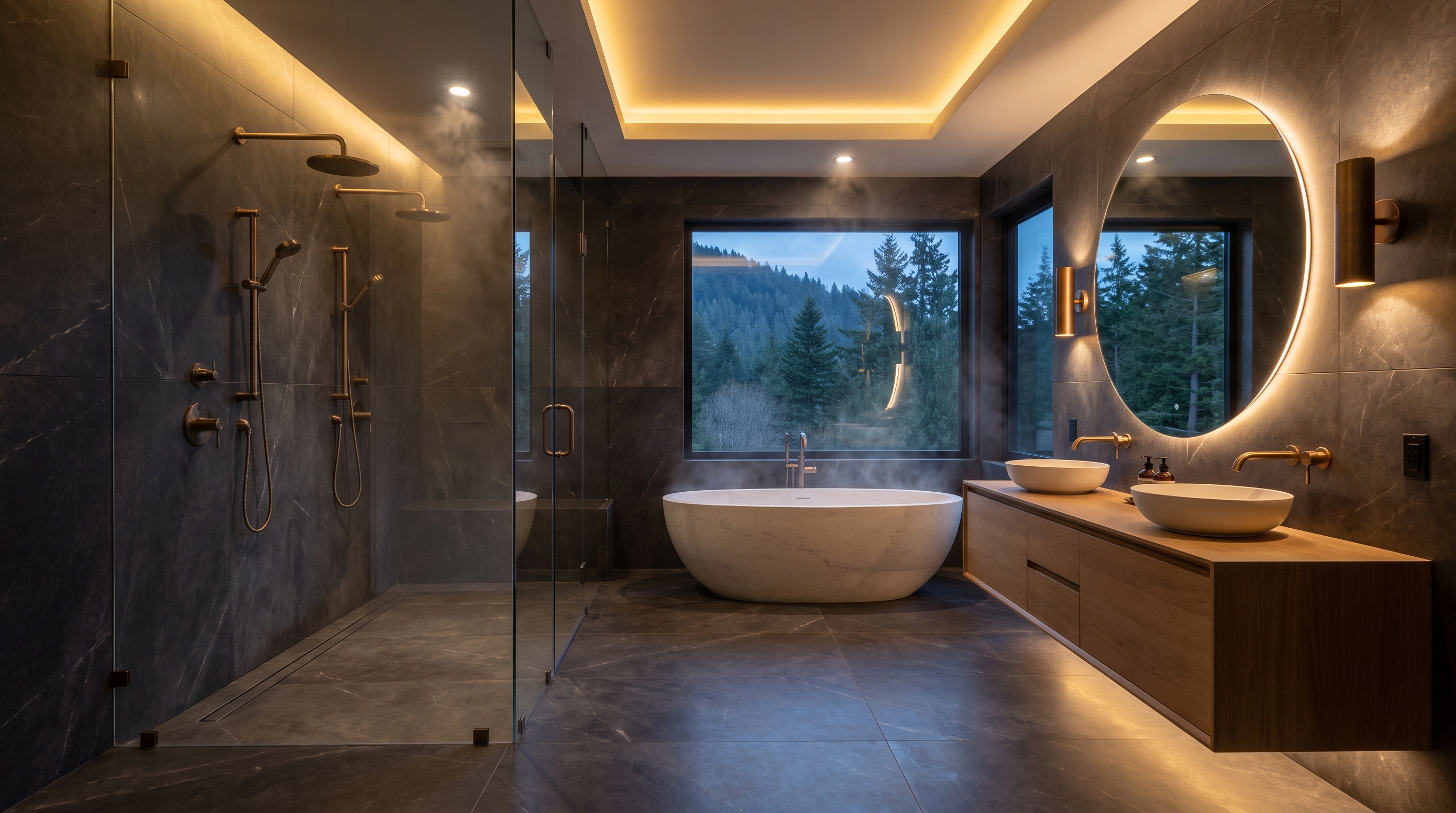
Bathroom pricing confuses homeowners for the same reason kitchen pricing does: 'bathroom remodel' describes everything from swapping a vanity to gutting a primary suite down to the studs. Those are different projects with different budgets, even in the same room.
This guide lays out the realistic ranges we see across Seattle and the Eastside, what actually moves the number, and the local factors — old plumbing, permits, tile labor — that surprise people. As always: orientation, not a quote. Every bathroom is scoped individually.
What does a bathroom remodel cost in Seattle right now?
In the Puget Sound market, a meaningful bathroom remodel generally starts in the low-to-mid five figures. A cosmetic refresh that keeps the existing layout — new vanity, fixtures, lighting, paint, maybe new flooring — commonly lands below that. A full gut remodel of a hall bath with new tile, tub or shower, waterproofing, and updated plumbing and electrical typically runs in the mid five figures. Primary-suite bathrooms with curbless showers, heated floors, custom glass, and layout changes regularly push toward the upper five figures and beyond.
Seattle-area labor rates are among the highest in the country, and tile-setting is some of the most labor-intensive work in the trade. Two bathrooms with identical fixture lists can land tens of thousands apart purely on tile scope and shower construction.
- Cosmetic refresh (same layout, surface updates): low five figures
- Full hall-bath gut (new tile, waterproofing, fixtures, code updates): mid five figures
- Primary suite (curbless shower, heated floors, layout changes): upper five figures+
The three decisions that move the number most
First: does the layout change? Moving the toilet, relocating a drain, or stealing space from a closet pulls plumbing, framing, and permits into the project. Second: the shower. A prefab pan with tile walls, a fully tiled custom shower, and a curbless entry with linear drain are three different budgets — waterproofing and slope work scale fast. Third: tile scope. Floor-only, wainscot height, or floor-to-ceiling changes both material cost and days of skilled labor.
Everything else — vanity line, counters, fixtures, glass — matters, but those three decisions set the project's weight class before you pick a single finish.
Rather talk it through?
Free consultations, honest answers, zero pressure.
What's behind the walls of an older Seattle bathroom
Much of Seattle's housing stock predates modern plumbing and electrical code. Galvanized supply lines, cast-iron drains at the end of their life, ungrounded circuits, and zero insulation in exterior walls are all common finds once tile comes off. A responsible bid carries an allowance for correction; a suspiciously low one usually means you'll meet these problems as change orders instead.
Homes built before 1978 also carry lead-paint rules: disturbing painted surfaces requires lead-safe work practices under the EPA's RRP rule. It's a real compliance item, not paperwork theater.
- Galvanized or cast-iron plumbing: budget to replace, not patch
- Pre-1978 homes: EPA lead-safe practices apply
- Exterior-wall bathrooms: insulation and ventilation upgrades while open
Where the money actually goes
On a typical full bathroom remodel, labor across the trades — demo, plumbing, electrical, waterproofing, tile, glass, finish — is the largest block, often approaching half the total. Tile and stone, the vanity and counters, and fixtures split most of the rest, with permits, ventilation, and project management rounding it out.
The cheapest place to save is fixtures and the vanity line; the most expensive place to save is waterproofing. A failed shower pan costs more to fix than the entire original tile budget.
How to budget without surprises
Set the all-in number you're comfortable with, then hold ten to fifteen percent aside as contingency before you shop a single finish. Ask every bidder what their number includes for waterproofing, ventilation, and plumbing correction — that's where scopes quietly diverge. And insist on itemized allowances so a tile upgrade is a known trade-off, not a shock.
- Hold 10–15% contingency, more for pre-1970s homes
- Compare bids on waterproofing and plumbing scope, not totals
- Itemized allowances turn upgrades into decisions instead of surprises
Authoritative resources